This application presents a unique opportunity to raise awareness among various segments of island society about the importance of vinegrowers in preserving Madeira Wine Traditions.
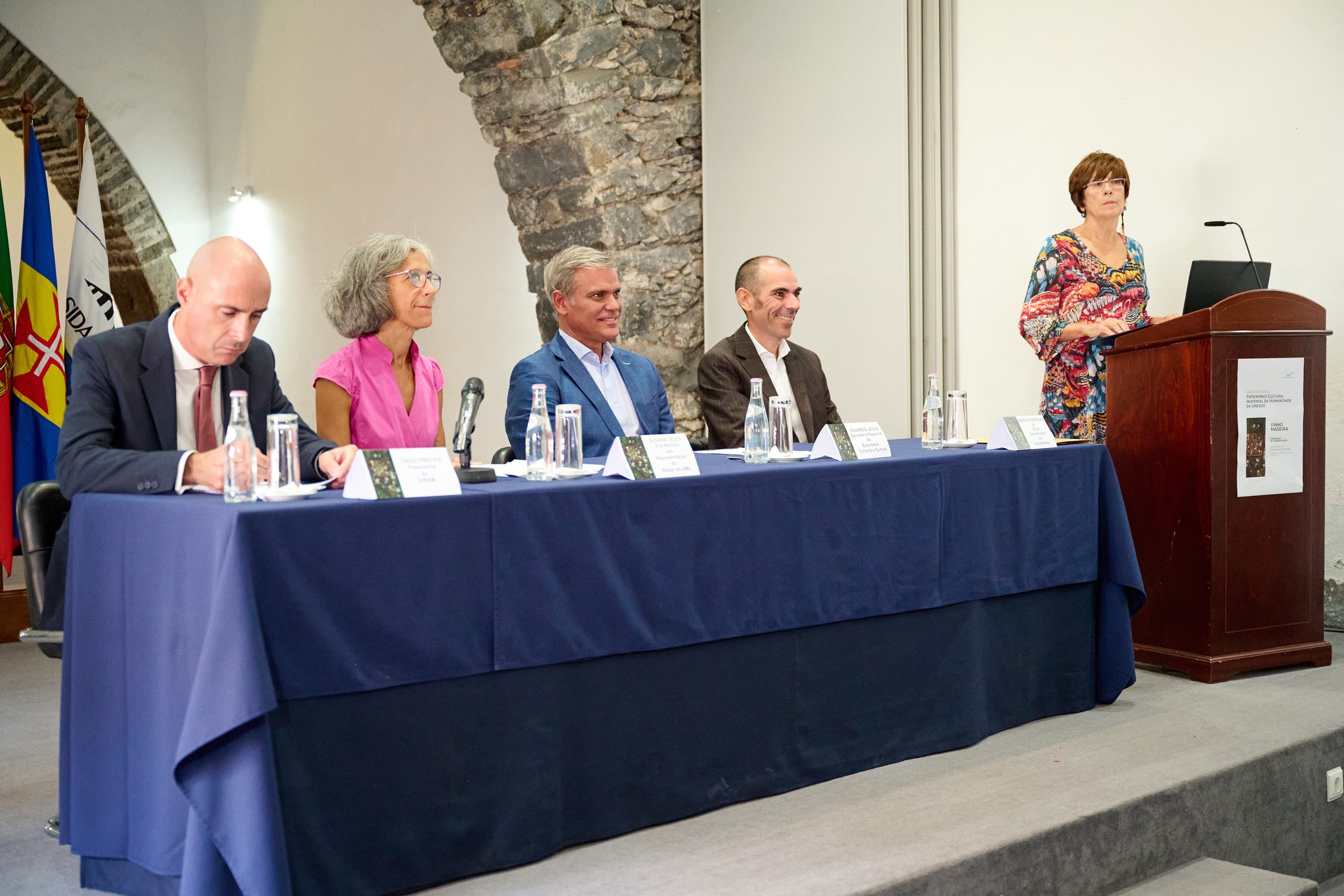
The University of Madeira has formally submitted the request to register Madeira Wine Traditions in the National Inventory of Intangible Cultural Heritage. This is one of the steps required for the submission of an application to UNESCO. The preparation of the technical dossier was based on the study of the vast wealth of data on the cultural manifestation under analysis, collected by researchers from different areas of knowledge, since the beginning of the twentieth century. The fieldwork also included the collection of 72 audio interviews of individuals from the entire Madeira Wine community, among which 24 are vine growers.
Outra linha de ação, iniciada logo na fase das entrevistas, consistiu em sensibilizar os viticultores para a necessidade de estarem representados por um coletivo, nomeadamente uma associação socioprofissional. Esta permitir-lhes-ia tomar parte de forma ativa nas decisões que irão moldar o seu futuro, sendo um passo muito importante para assegurar a sobrevivência da sua atividade.
A metodologia adotada para a preparação da candidatura privilegiou, sempre que possível, a participação da comunidade interessada neste processo de patrimonialização. Assim, a cada uma das oito empresas autorizadas a produzir Vinho Madeira, foi solicitado que selecionasse e cedesse material fotográfico e audiovisualdos seus acervos. O objetivo é documentar o pedido de inscrição no inventário nacional do PCI. Foi possível reunir, desta forma, 278 fotografias e 5 vídeos que retratam o processo de produção (da latada até ao engarrafamento). Uma dessas empresas (Madeira Wine Company) forneceu ainda cópias de vários documentos inéditos até hoje, conservados no seu arquivo empresarial. Estes documentam ocorrências importantes para a história das manifestações culturais em análise.
One of the most important actions carried out, as part of the preparation of the application, was its presentation to a wide range of entities, from Regional Government bodies, city councils, companies in the sector, non-profit cultural and recreational organizations, etc. The following are the meetings held with these entities and their respective dates:
- 18/04/2024 – meeting with the President of the Região Autónoma da Madeira.
- 12/06/2024 – meeting with the President of the Mesa da Secção dos Vinhos da ACIF-CCIM.
- 19/06/2024 – meeting with the Assembleia da Mesa da Secção dos Vinhos da ACIF-CCIM.
- 25/06/2024 – meeting with the President of the Confraria Enogastronómica da Madeira.
- 26/06/2024 – meeting with the manager and the staff of Henriques & Henriques.
- 27/06/2024 – meeting with the manager and the staff of Madeira Wine Company.
- 03/07/2024 – meeting with the manager and the staff of H. M. Borges.
- 03/07/2024 – meeting with manager and the staff of J. Faria & Filhos.
- 04/07/2024 – meeting with the manager and the staff of Justino’s Madeira.
- 04/07/2024 – meeting with the manager and the staff of Vinhos Barbeito.
- 11/07/2024 – meeting with the manager and the staff of Madeira Vintners.
- 15/07/2024 – meeting by Zoom with the Vereadora da Educação e da Juventude of the C. M. do Porto Santo.
- 17/07/2024 – meeting with the Vice-Presidente of the C. M. da Calheta.
- 18/07/2024 – meeting with the President of the C. M. de Câmara de Lobos.
- 18/07/2024 – meeting with the Vice-President of the C. M. de Santa Cruz.
- 22/07/2024 – meeting with the Diretor Regional das Comunidades e da Cooperação Externa.
- 22/07/2024 – meeting with the manager and the staff of D’Oliveiras.
- 22/07/2024 – meeting with the oenologist of Justino’s Madeira.
- 22/08/2024 – meeting with the manager of Quinta das Vinhas.
- 26/08/2024 – meeting with the President of the CDISA; meeting with the manager of Ferreira’s.
- 28/08/2024 – rmeeting with the Diretor Regional da Cultura.
- 30/08/2024 – meeting with the President of the Instituto do Vinho, do Bordado e do Artesanato da Madeira.
- 02/09/2024 – meeting with the owner of Quinta de Santa Luzia.
- 09/09/2024 – meeting with the Secretário Regional da Economia, Turismo e Cultura.
- 24/09/2024 – meeting by Zoom with the CEO of Saraiva Inc. de New Bedford (E.U.A.).
- 30/09/2024 – meeting with the Vice-President of the C. M. da Ponta do Sol.
- 02/10/2024 – meeting with the Vice-President of the C. M. da Ribeira Brava.
- 08/10/2024 – meeting with the Director of the Centro Cívico do Estreito de Câmara de Lobos.
- 08/10/2024 – meeting with the Vice-President of C. M. de Machico.
- 21/10/2024 – meeting with the President of the Câmara Venezuelana Portuguesa de Comércio, Indústria, Turismo e Afins.
- 29/11/2024 – meeting with the President of the Associação Serras da Ilha.
- 17/01/2025 – meeting with the President of the Junta de Freguesia do Estreito de Câmara de Lobos.
We were also present at events such as EXPO MADEIRA (Barreiros Stadium, 13/07/2024), providing information about the application to visitors to the fair, at the stand of the University of Madeira.
O envolvimento da comunidade não se ficou, porém, por aqui. Os alunos do 2º ano das licenciaturas de Direção e Gestão Hoteleira (ESTG; orientação: AJMS) e de Estudos de Cultura (DLLC da FAH; orientação: NNN) apresentaram a candidatura e os seus objetivos junto de um total de 62 instituições de proximidade, incluindo juntas de freguesia, casas do povo, centros de dia, escolas secundárias, universidades seniores, associações com fins culturais e recreativas, etc. São elas:
- 28/10/2024 – Associação de Desenvolvimento Comunitário – Garouta do Calhau (Funchal).
- 04/11/2024 – Universidade Sénior (Ribeira Brava).
- 04/11/2024 – Escola Profissional Cristóvão Colombo (Funchal).
- 05/11/2024 – Conselho de Cultura da UMa (Funchal).
- 05/11/2024 – Centro de Dia de São Roque (Funchal).
- 07/11/2024 – Faculdade de Arte e Humanidades da UMa (Funchal).
- 08/11/2024 – Junta de Freguesia de São Gonçalo (Funchal).
- 11/11/2024 – Lar Jardim do Sol do Caniço (Santa Cruz).
- 13/11/2024 – Centro de Convívio Professor Virgílio Pereira (Funchal).
- 13/11/2024 – Departamento de Línguas, Literaturas e Culturas (Funchal).
- 14/11/2024 – Junta de Freguesia do Estreito de Câmara de Lobos (Câmara de Lobos).
- 18/11/2024 – Casa do Povo de Câmara de Lobos (Câmara de Lobos).
- 18/11/2024 – Junta de Freguesia da Sé (Funchal).
- 18/11/2024 – Universidade Sénior do Imaculado Coração de Maria (Funchal).
- 18/11/2024 – Junta de Freguesia de Santa Maria Maior (Funchal).
- 26/11/2024 – Associação Grupo de Folclore da Calheta (Calheta).
- 27/11/2024 – Esboço Subtil Lda (Funchal).
- 29/11/2024 – Escola Secundária Francisco Franco (Funchal).
- 04/12/2024 – Biblioteca Municipal de Câmara de Lobos (Câmara de Lobos).
- 04/12/2024 – Escola Superior de Tecnologias e Gestão (Funchal).
- 09/12/2024 – Centro Sénior das Cruzes (Funchal).
- 10/12/2024 – Casa do Povo da Camacha (Santa Cruz).
- 12/12/2024 – Escola Profissional de Hotelaria e Turismo da Madeira (Funchal).
- 17/12/2024 – Departamento de Línguas, Literaturas e Culturas da UMa (Funchal).
- 10/02/2025 – UNESCO Winter School “Digital Media for Island Tourism. The case of Madeira and its heritage” (USI/ FLUC/ESHTE/UMa, Funchal).
- 04/10/2025 – D’Olival Azeites & Cia.
- 16/10/2025 – Tuna D’Elas – Tuna Feminina da Universidade da Madeira.
- 17/10/2025 – Grupo de Folclore da Ponta do Sol.
- 19/10/2025 – Visual Moderno Construções Ldª.
- 20/10/2025 e 22/11/2025 – Associação Desportiva de Campanário.
- 22/10/2025 – Escola Básica e Secundária de Machico.
- 23/10/2025 – Centro de Estética True Beauty.
- 23/10/2025 – Brasilinvest- Marketing e Serviços, Soc. Unip., Ldª.
- 24/10/2025 – Madeira Friends.
- 28/10/2025 – Escuteiros de Santa Cecília – Agrupamento 1082.
- 29/10/2025 – Bar O Capelinha.
- 30/10/2025 – Junta de Freguesia dos Canhas.
- 30/10/2025 – Madeira Home Rentals.
- 03/11/2025 – Casa do Povo do Porto Santo.
- 03/11/2025 – Casa do Povo de São Martinho.
- 04/11/2025 – Hotel Jardins d’Ajuda.
- 05/11/2025 – Hotel Riu Madeira.
- 10/11/2025 – Universidade Sénior da Ribeira Brava.
- 10/11/2025 – Xarabanda Associação Musical e Cultural.
- 10/11/2025 – Junta de Freguesia da Tabua.
- 10/11/2025 – Santa Casa da Misericórdia da Calheta.
- 13/11/2025 – Centro de Atividades e Capacitação para a Inclusão de Santa Cruz.
- 13/11/2025 – Clube Desportivo de São Roque.
- 17/11/2025 – Centro Comunitário Cidade Viva.
- 18/11/2025 – Universidade Sénior de Santa Maria Maior.
- 18/11/2025 – Casa do Povo de São Gonçalo.
- 19/11/2025 – Centro Social e Paroquial da Encarnação.
- 19/11/2025 – Causa Social.
- 19/11/2025 – Pilares Inéditos Ldª.
- 19/11/2025 – Aposta Precisa Ldª.
- 20/11/2025 – Leonor Vares Soc. Unip., Ldª.
- 21/11/2025 – Casa do Povo de São Roque.
- 21/11/2025 – Casa do Povo do Paul do Mar.
- 21/11/2025 – Hotel Three House.
- 21/11/2025 – Associação para Promoção da Herança Madeirense.
- 22/11/2025 – Centro Social e Paroquial de São Bento da Ribeira Brava.
- 26/11/2025 – Casa do Povo da Fajã da Ovelha.
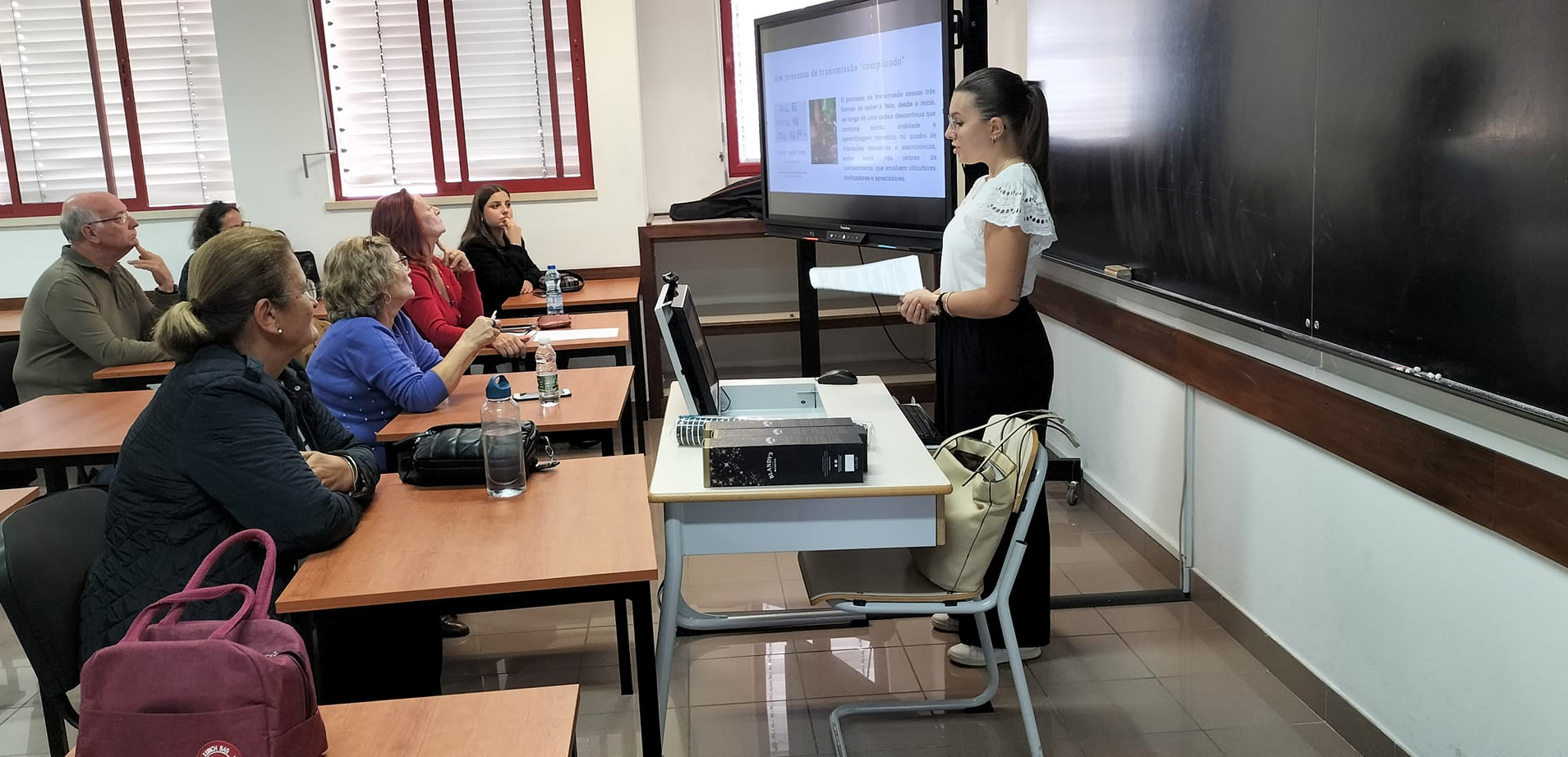
In each of these clarification sessions, the students asked to the audience why the respective entity should give its consent to this initiative. The ideas that came from this sharing of knowledge were then transmitted to the respective directive office of the host entities, and they were asked to provide a letter of consent, with a view to formalizing the request for registration on the ICH Representative List.
All these initiatives have in turn created the opportunity to explain personally and locally what intangible cultural heritage consists of and the representative list that UNESCO has dedicated to it. It was also possible to clarify, first-hand, the difference between this list and that of the World Heritage. Madeirans often confuse them, due to the unsuccessful application of Madeira's levadas, carried out by the Regional Secretariat for Agriculture, Fisheries and Environment, together with other bodies, including the Regional Directorate of Culture (which UNESCO recommended be reformulated) .
The application of the Madeira Wine Traditions is also a unique opportunity to raise awareness among the different segments of island society about the importance of vine growers in the continuity of this cultural heritage. We thus echoed the concerns expressed by many of them during the interviews, regarding the increasingly weak economic return of their effort and the low social valuation of their work. The importance of this socio-professional group was in fact one of the key ideas focused during the kick-off ceremony of the candidacy, which took place at the University of Madeira, on September 11, 2024. The auditorium was completely filled, which shows the affection that the community has for the cultural element object of the application for registration under analysis. The wide coverage of this event by the regional, national and international media has in turn given the possibility of expanding the reach of this initiative.
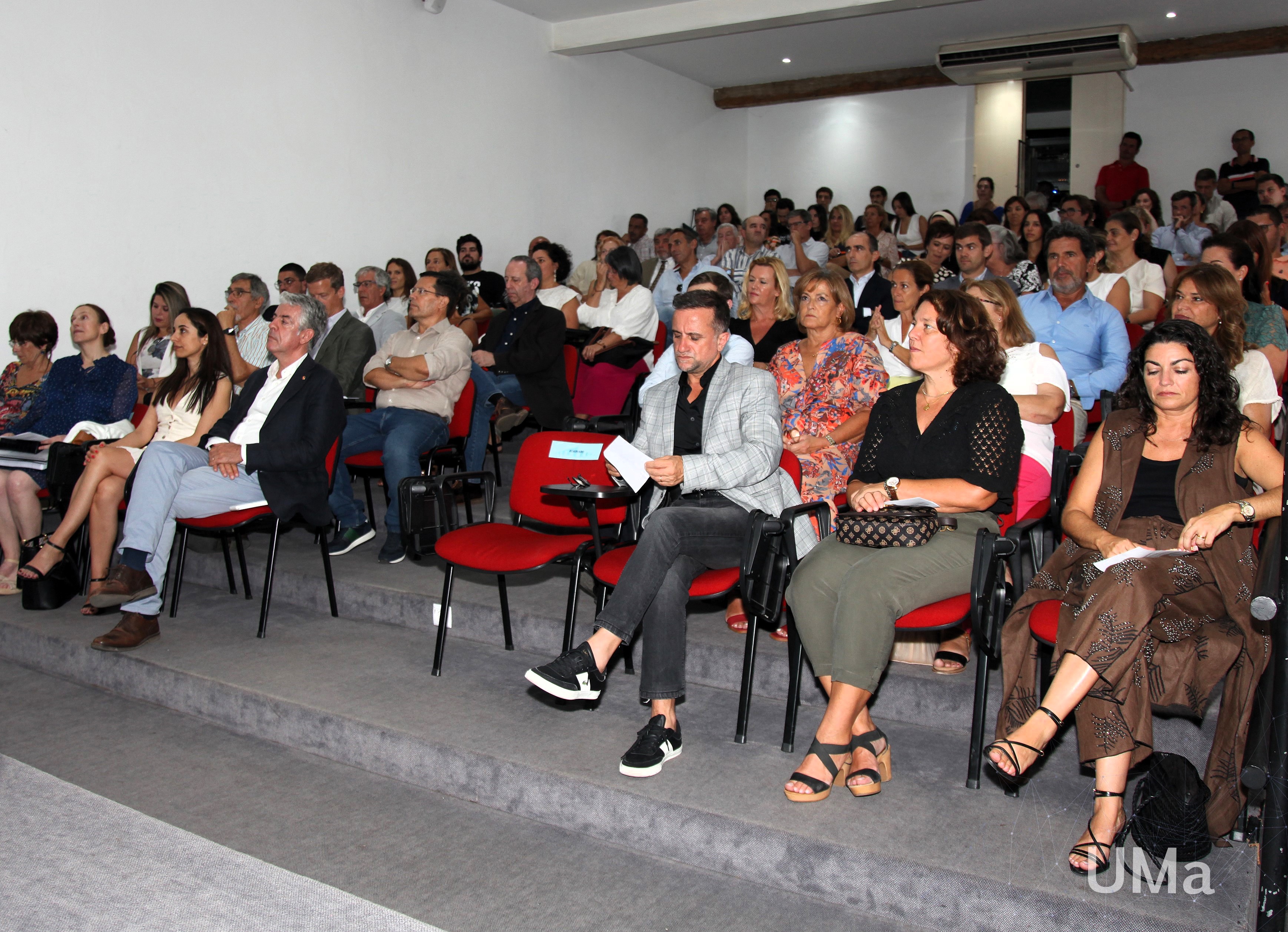
The public discussion of the Charter for the Safeguarding of Madeira Wine Traditions, announced on that day, was scheduled for December 14, 2024. These initiatives were important because the success of the candidacy depends, to a large extent, on the buy-in of all the living forces in the region. In addition, the panel of participants should be interdisciplinary, cross-sectoral and open to all stakeholders, starting with the vine growers. This was the reason that led us to schedule the public discussion at the Civic Center of Estreito de Câmara de Lobos, a parish self-titled "Land of Wine". The municipality of Câmara de Lobos collaborated in the organization of this event.
The participation of third parties, namely the municipalities, the Regional Government, academia and the people's houses, was aimed at highlighting the importance of this activity for the economic, social and cultural life of our region. It was a hybrid meeting, using videoconferencing tools, facilitating the participation not only of the Porto Santo community, but also of the communities of the Diaspora. Generally, these are left out of this type of procedure (as previous studies have shown), but also of importers and connoisseurs of other nationalities. All of them are part of the Madeira Wine Heritage Community, which is defined as the group of people who mobilize in favor of its viability, in the document presented this day.
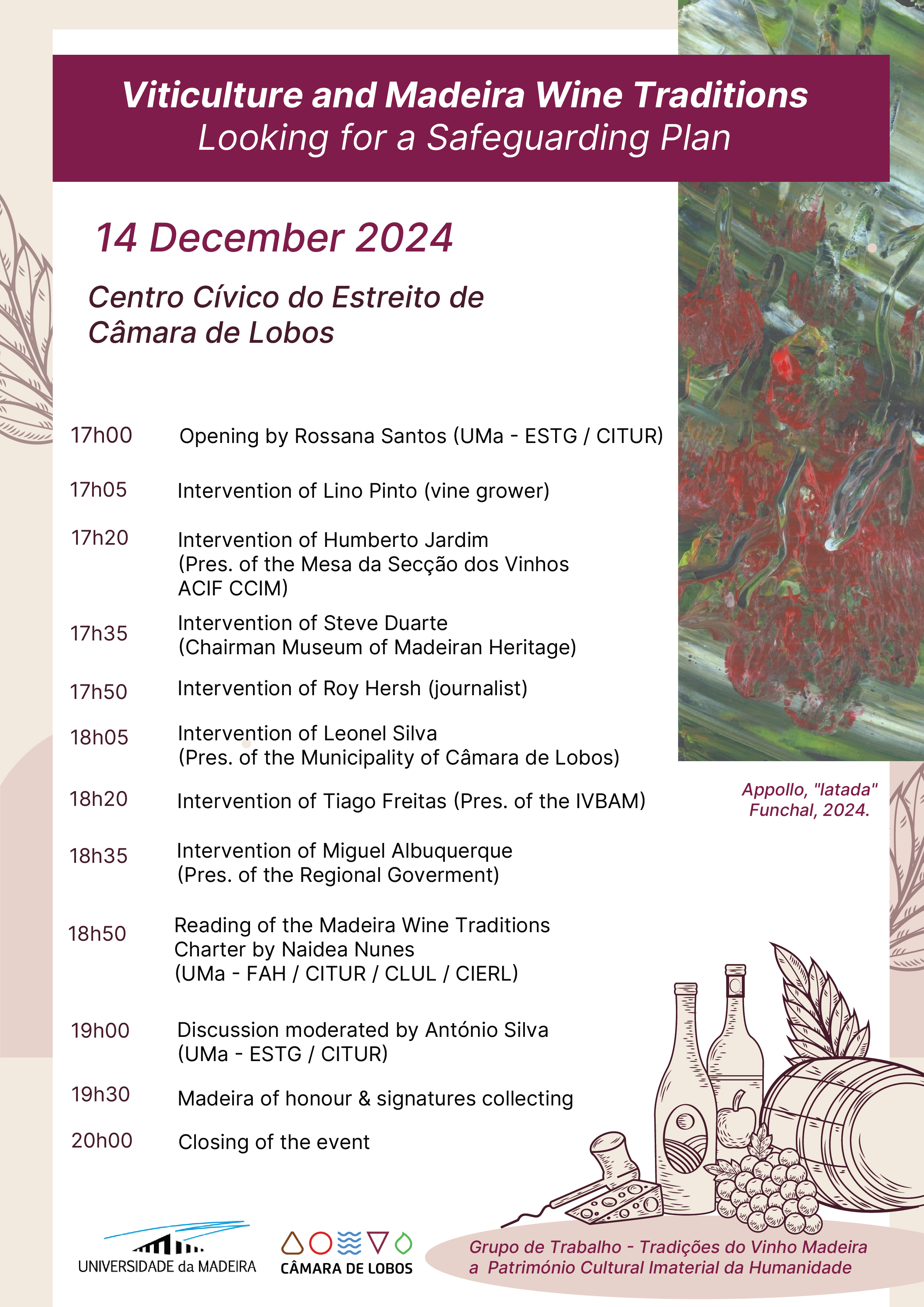
This Charter, or "Charter" as it is called in UNESCO arenas, is a central element of the application. It is a kind of declaration of principles that demonstrates the commitment of the community, which proposes the nomination, to make the cultural element that it intends to inscribe viable. A first version of this document was provided, well in advance, to all the entities mentioned above, namely all the competent bodies of the Regional Government and all municipal councils, parish councils, community centres and other non-profit cultural and recreational organizations in the Autonomous Region of Madeira and beyond.
Everyone thus had the opportunity to analyse its content, request clarifications, suggest amendments or even additions. On December 14, 2024, it was possible to present a definitive document, right at the end of the meeting, which could be ratified immediately by those present, either physically or virtually. Those who did not have the possibility to participate in this event still have the possibility to consult the Charter and, if you approve its content, subscribe to it here.
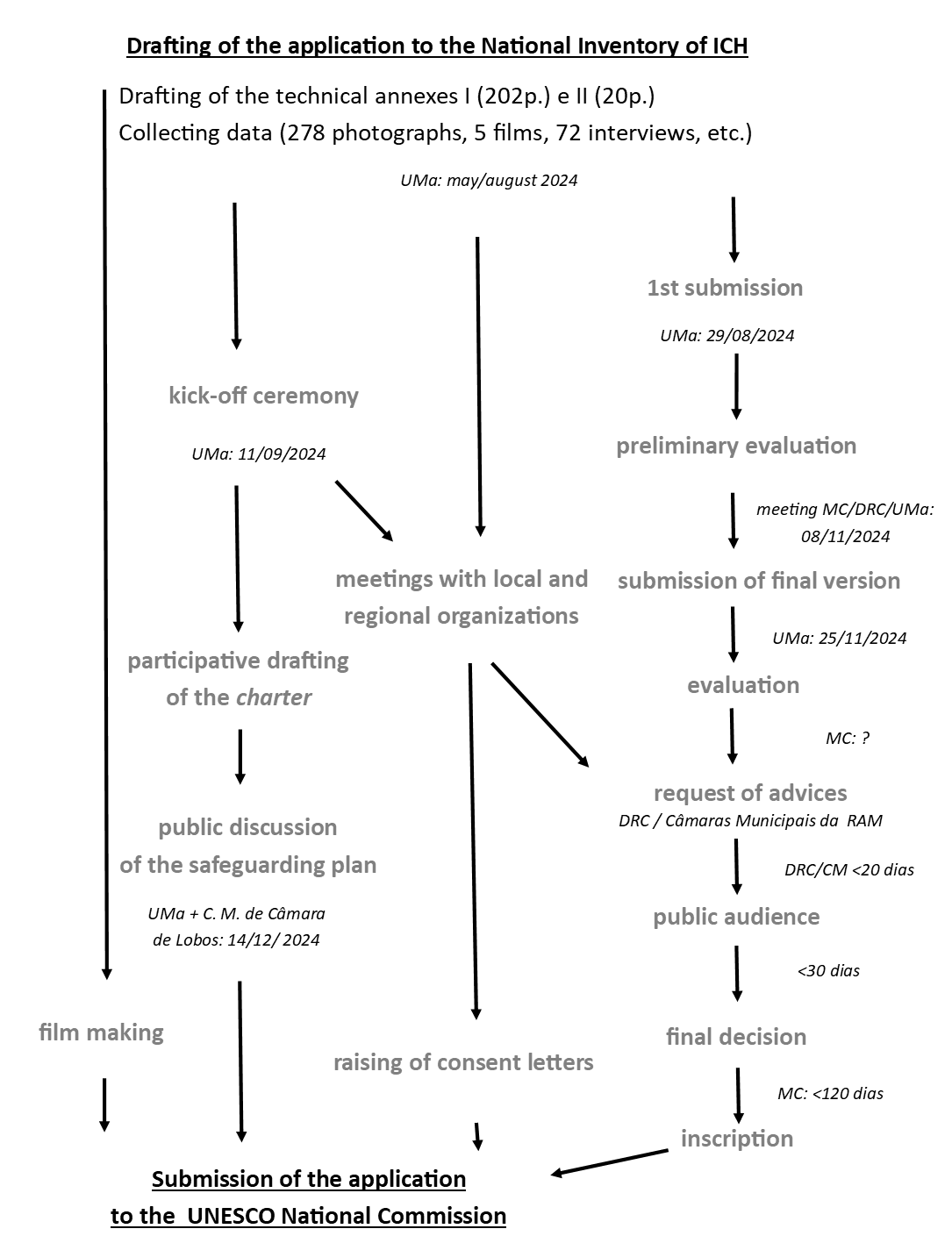
We are now awaiting the assessment of the application for registration of Madeira Wine Traditions in the national inventory of intangible cultural heritage, a sine qua non condition to be able to proceed with the formalization of the application with the National Commission of UNESCO.
 English
  Portuguese